
 More Than Too Many Treats: Understanding Canine Obesity & How Your Veterinarian Can Help
Obesity is one of the most common health issues facing dogs today. As pet parents, we often show love through food,treats, and extra helpings. It can be hard to say no to those puppy-dog eyes, but when food becomes our main expression of affection, we may be putting our dogs’ health at risk.
An estimated 59% of dogs in the United States are overweight or obese, according to the Association for Pet Obesity Prevention. While a chubby pup may look cute, extra weight can strain the joints, interfere with vital body functions, accelerate chronic disease, and shorten a dog’s life by years.
Is Your Dog a Healthy Weight?
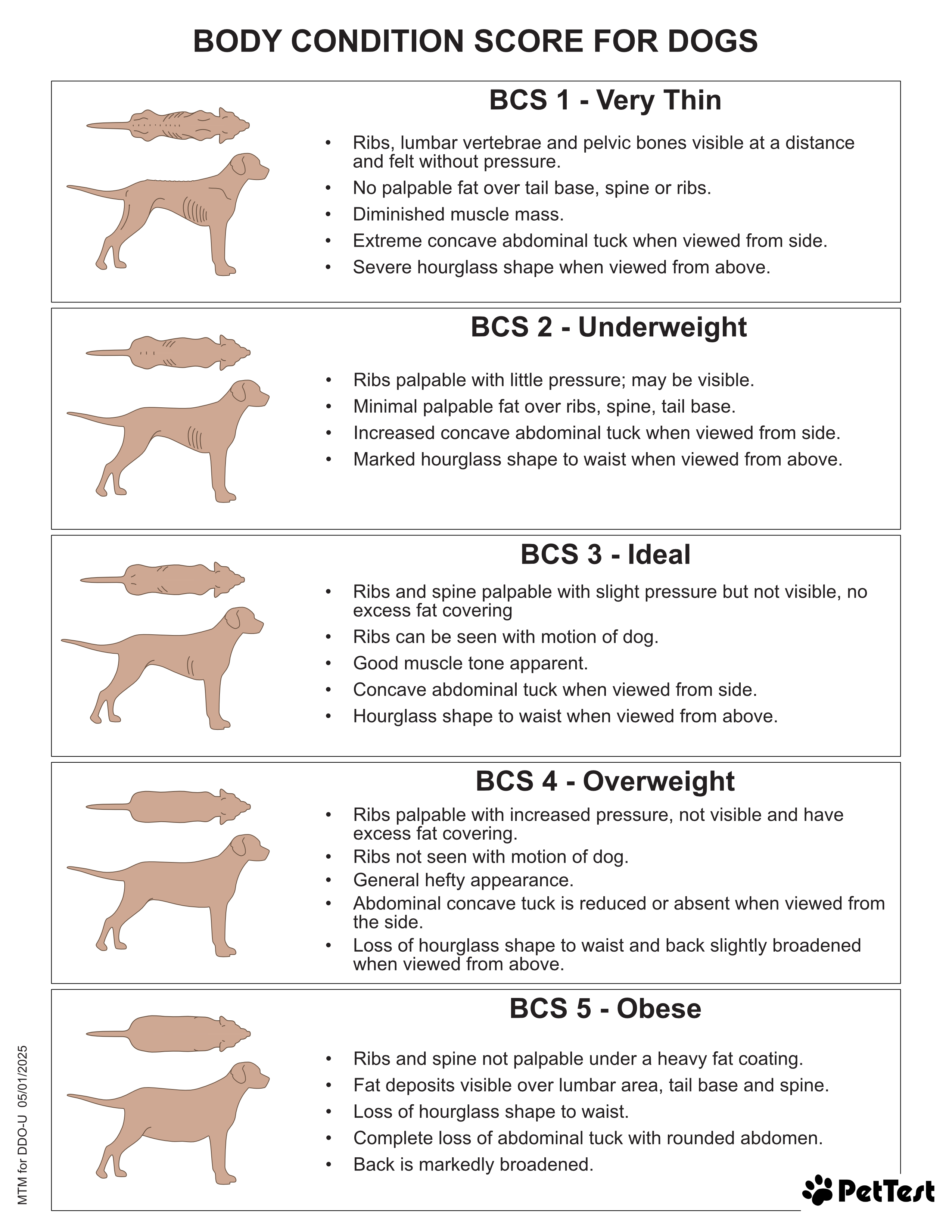
Not sure whether your dog is at a healthy weight? Use the Body Condition Score chart below as a starting point, then ask your veterinarian to confirm the score and evaluate your dog’s overall health.
Why Some Dogs Are at Higher Risk
Any dog can become overweight or obese, but some breeds are more prone to weight gain. Breeds commonly associated with an increased risk include:
- Cocker Spaniels
- Beagles
- Cairn Terriers
- Chihuahuas
- Labrador Retrievers
- Flat-coated Retrievers
- Basset Hounds
- Shetland Sheepdogs
- Longhaired Dachshunds
- Rottweilers
- Dalmatians
- Cavalier King Charles Spaniels
- Golden Retrievers
- Pugs
Interesting fact: Labrador Retrievers and Flat-coated Retrievers can have a POMC gene deletion that affects hormones involved in hunger and energy regulation. This is why some Labs and Retrievers always SEEM hungry, they lack the “off” switch for hunger.
When Weight Gain May Signal a Medical Issue
Overfeeding is the most common cause of obesity in dogs, but unwanted weight gain can also be linked to underlying health conditions. These may include:
- Hypothyroidism
- Hyperadrenocorticism, also known as Cushing’s disease
- Diabetes mellitus
- Insulinoma
- Insulin resistance
- High triglycerides and cholesterol
- Pancreatitis
- Liver disease
- Cardiovascular disease
- Altered kidney function / kidney disease
- Oral disease
Medications such as corticosteroids and some anticonvulsants can also contribute to weight gain as a side effect.
Start with Your Veterinarian
If you are concerned about your dog’s weight, schedule an appointment with your veterinarian for a complete assessment. Your veterinarian can confirm your dog’s Body Condition Score (BCS) and assess their Muscle Condition Score (MCS), which helps distinguish excess body fat from loss of lean muscle.
Depending on your dog’s history and examination findings, the assessment may also include a complete blood count (CBC), blood chemistry panel, urinalysis, and thyroid testing. These tests can help identify or rule out underlying conditions that may contribute to weight gain. In some cases, your veterinarian may recommend additional bloodwork, diagnostic testing, or follow-up monitoring.
Be prepared to share a detailed feeding history, including:
- Your dog’s regular food, treats, and any human foods
- Mealtimes and portion sizes
- How portions are served, such as weighed portions, measured servings, or free feeding
Your veterinarian may also ask about your dog’s usual activity routine, including the types of exercise they get, how often and how long they are active, and whether they tire easily, limp, slow down, or seem reluctant to move.
Building a Safe Weight-Management Plan
The information gathered during the visit will help your veterinarian create a safe, realistic weight-management plan tailored to your dog.
This plan may include a specific daily calorie goal, measured meal portions, healthier treat options, and gradual changes to your dog’s activity level. Your veterinarian can also help set realistic milestones and schedule regular weigh-ins to make sure your dog is losing weight safely while still getting the nutrients they need.
Small Steps, Lasting Benefits
Remember that helping your dog reach a healthier weight is an act of love, not restriction. With patience, consistency, and support from your veterinary team, small daily choices like measuring meals, choosing treats thoughtfully, and adding gentle activity can make a meaningful difference.
Every small step toward a healthier weight is a step toward more tail wags, easier walks, and cherished time together.
Bonus
Guilt-free bone broth gummies recipe!
These treats are low calories, packed with protein and zero fat. The whole recipe is approximately 136 calories. Make sure to purchase bone broth made for dogs - human brands may include onion which is toxic for dogs.
- 4 tablespoons plain gelatin powder
- ½ cup cold water
- 1 cup bone broth
Mix gelatin powder with ½ cup cold water and set aside for five minutes. This allows the gelatin to bloom.
While the gelatin blooms heat the bone broth in a saucepan. Once gelatin blooms, mix into bone broth and stir until completely dissolved. Pour mixture into silicone molds and let cool in the refrigerator for about four hours.
Refrigerate for up to one week. Gummies can be frozen as well. Approximately 136 calories per recipe. To get calories per piece, just divide 136 by the number of gummies you get.
Until next time stay comfy, don’t stress and you got this!
Michelle Miller-Matlock, Cert.CN, Cert.FN
AAHA Certified Diabetes Educator
Founder/Administrator of DDO: Diabetic Dog Owners University
Administrator of Diabetic Dog Owners on Facebook
Want to learn all you can in a simple and easy to follow format? Please join DDO-U: Diabetic Dog Owners University, graciously sponsored by PetTest.
Be sure to join the PetTest family on Facebook and Instagram. PetTest has fun, interactive posts AND they have fabulous giveaways every week!
Do you need a blood glucose meter kit for your diabetes arsenal? There are two meters you can choose from, the PetTest Classic and the PetLink+ meter that has wireless technology and works seamlessly with the Digital Companion App.
USA links:
PetTest Classic Meter Kit: https://shoppettest.com/pettest-meter-kit/
PetLink+ Meter Kit: https://shoppettest.com/petlink-plus-meter-kit-includes-25-test-strips/
PetTest link: https://shoppettest.com/
Canada links:
PetTest Classic Meter Kit: https://pettest.ca/pettest-meter-kit/
PetLink+ Meter Kit: https://pettest.ca/pettest-petlink-meter-kit-includes-25-test-strips/
PetTest link: https://pettest.ca/
UK links:
PetTest Classic Meter Kit: https://pettest.uk/pettest-meter-kit-includes-25-test-strips/
PetLink+ Meter Kit: https://pettest.uk/pettest-petlink-meter-kit-includes-25-test-strips/
PetTest link: https://pettest.uk
Don’t forget to check your email for the latest PetTest promo codes and if you aren’t subscribed to receive PetTest emails sign up now. You can also go to PetTest on Facebook or Instagram for current promo code info.