

 Pancreatitis: How It Disrupts Your Dog’s Body
When the vet told me that Lucy had severe acute pancreatitis and diabetes there were a few questions that immediately went through my mind. How did she get pancreatitis? How did she get diabetes? Could she survive these? I had experience with human pancreatitis and knew enough to know she needed pain medication, ultra-low-fat diet, fluid therapy and nausea meds. When it came to canine diabetes, I knew nothing at first, but I quickly learned how to manage it successfully. Lucy never had another bout of pancreatitis and diabetes was well managed until the end of her life at almost 16 years old.
Pancreatitis is a terrible disorder. It is very painful and can disrupt the entire body. Understanding exactly what pancreatitis can do is very helpful for us caregivers so I am going to go over what the pancreas is and does, what pancreatitis is, symptoms, how it’s treated and complications of pancreatitis. Some of this is a bit technical, but understanding what the pancreas does is important and will make the rest of the article easier to follow.
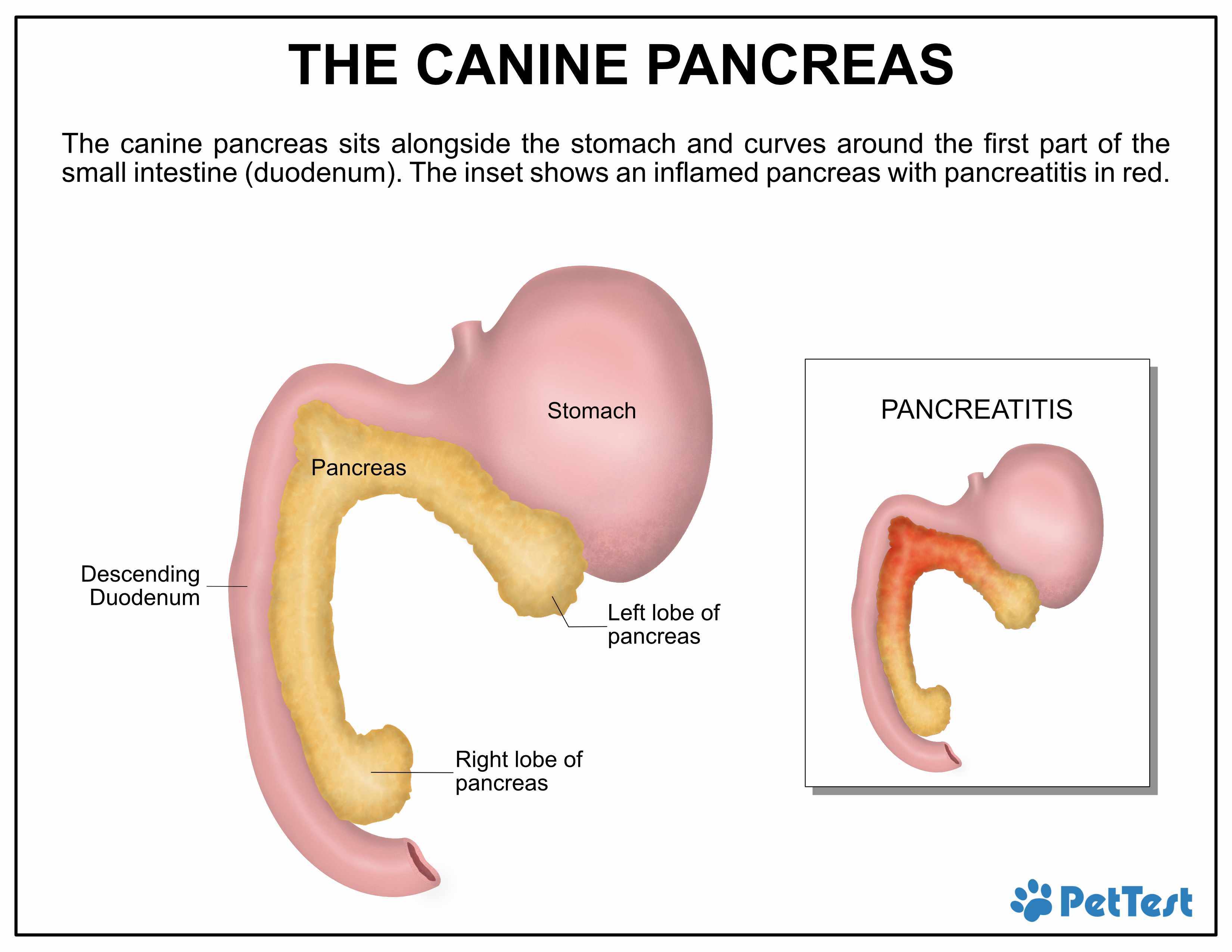
The pancreas is an organ in the body that has two functions: the endocrine function is hormonal and the exocrine function is digestive. Only 1 - 2% of the pancreas is made up of endocrine cells, and the rest is exocrine cells in dogs. In simple terms, the pancreas helps control blood glucose and helps your dog digest food.
The endocrine function of the pancreas secretes insulin, glucagon and somatostatin specifically in the islets of Langerhans. The main function of each is:
- Insulin – a hormone secreted by beta cells; acts as a “key” to open cells to uptake glucose, the body’s primary form of energy.
- Glucagon – a hormone secreted by alpha cells; helps maintain blood glucose levels and prevents hypoglycemia by messaging the liver to release stored glucose.
- Somatostatin – a hormone that inhibits the secretion of hormones such as insulin and glucagon; this helps balance blood glucose levels.
- Pancreatic polypeptide – a hormone produced by F cells that regulates digestion, digestive enzyme secretion and controls appetite.
Together, these hormones keep your dog’s blood sugar in a healthy range so their cells have steady energy.
The exocrine function of the pancreas secretes digestive enzymes from acinar cells.
- Amylase – a digestive enzyme that break down carbohydrates in the small intestine.
- Lipase – a digestive enzyme that digest fats in the small intestine.
- Proteases – a group of digestive enzymes that break down proteins in the small intestine.
- Bicarbonate – neutralizes stomach acid in the small intestine.
These enzymes break down nutrients (carbs, fats and proteins) into pieces small enough for the body to absorb.
There are many reasons a dog can develop pancreatitis. These include genetics, gallstones, gallbladder sludge, obesity, high cholesterol, trauma, cancer, and medications like steroids. There can also be no known reason which is called idiopathic pancreatitis.
Symptoms of pancreatitis include:
- Inappetence
- Lethargy
- Dehydration
- Vomiting bile
- Vomit that looks like coffee grounds (partially digested blood)
- Diarrhea
- Constipation
- Hunched (praying position)
- Abdominal pain (tender to the touch)
- Restlessness / agitation
- Unable to stand (acute pancreatitis)
- Shock (acute pancreatitis)
All these symptoms require a vet as soon as possible but if your dog is vomiting coffee grounds or is in shock they need to go the vet or ER immediately.
To diagnose pancreatitis, the following tests should be run:
- SNAP cPL (canine pancreas-specific lipase) – this is an in-house test that gives results quickly. This should not be used solely to diagnose pancreatitis.
- Blood panel including CBC (complete blood count)
- cPLI (pancreatic lipase immunoreactivity) test – this detects lipase that is produced in the pancreas.
Ultrasound and x-rays may also be necessary to diagnose pancreatitis.
Treatment for pancreatitis may be necessary in the vet hospital, but can be done at home with vet approval and includes:
- Low-fat diet, under 10% fat on a dry matter basis needs to be fed. Bland diet and several meals throughout the day may be advised to help reduce strain on the pancreas.
- Anti-nausea medication
- Antibiotics
- Pain medications
- Fluid therapy for dehydration
Treatment may also include acid reducers, anti-diarrhea medication and a supplement to coat and protect the GI tract like Gastro Comfort.
When a dog develops pancreatitis, it may seem like just a stomach or digestive issue, but there is a lot more happening beneath the surface. During pancreatitis, the cells responsible for producing digestive enzymes, called acinar cells, can be activated inside the pancreas, and the organ essentially starts to digest itself. In severe cases, this can trigger a cascade of problems in the body, including poor absorption of nutrients, blood glucose issues, tissue damage and infection, changes in kidney and liver values, and bile duct obstruction. Not every dog will develop all of these, but it helps to understand what can happen in more serious cases.
Malabsorption of nutrients
Pancreatitis causes tissue damage which can be permanent. This can cause exocrine pancreatic insufficiency (EPI). The acinar cells become damaged and can no longer produce the digestive enzymes necessary to break down carbohydrates, fats and proteins. The body cannot absorb nutrients and the results can be a voracious appetite, severe weight loss, foul and greasy smelling stools. A serum trypsin‑like immunoreactivity (TLI) blood test is used to confirm EPI, and many dogs improve with prescription enzyme supplements added to their food.
Blood glucose issues
While much of the initial damage in pancreatitis involves the acinar cells, the hormone-producing cells in the islets of Langerhans can also be affected. These are the cells that secrete insulin as well as the cells that produce glucagon, somatostatin and pancreatic polypeptides. When inflammation spreads, these cells can become impaired or even destroyed. Damage to these cells can cause diabetes and for a dog that is already diabetic, can make blood glucose harder to control.
Tissue damage and sepsis
Tissue damage in the pancreas can also lead to necrosis (areas of dead tissue), fibrosis (scarring), fluid‑filled pockets called pseudocysts, and abscesses (pockets of infection). All of these are serious complications of pancreatitis and often require intensive care at the veterinary hospital. They increase the risk of sepsis, which is a severe body‑wide infection that can be life‑threatening without rapid treatment.
Changes in kidney and liver values
When digestive enzymes and inflammatory chemicals are released into the bloodstream, they can cause inflammation in organs like the liver and kidneys. It is common to see elevated kidney and liver values on the blood work of a dog with pancreatitis. In many cases, these values go back toward normal once the pancreatitis has been treated and the inflammation has resolved.
Bile duct obstruction
Bile duct obstruction can happen with severe pancreatitis because inflammation around the pancreas can cause swelling or compression of the bile ducts. Most of the time, this is managed with medications and supportive care, but a smaller number of cases require surgery to relieve the obstruction.
Pancreatitis is a complex and sometimes frightening disease but understanding what the pancreas does and how inflammation affects the rest of the body can make it a little less overwhelming. As caregivers, we cannot control every risk factor, but we can learn the warning signs, seek prompt veterinary care, and work closely with our vet team on diet, pain control, and follow‑up testing. With the right support, many dogs go on to live happy lives after pancreatitis, just like Lucy did.
Until next time stay comfy, don’t stress and you got this!
Michelle Miller-Matlock
AAHA Certified Diabetes Educator
Founder/Administrator of DDO: Diabetic Dog Owners University
Administrator of Diabetic Dog Owners on Facebook
Want to learn all you can in a simple and easy to follow format? Please join DDO-U: Diabetic Dog Owners University, graciously sponsored by PetTest.
Be sure to join the PetTest family on Facebook and Instagram. PetTest has fun, interactive posts AND they have fabulous giveaways every week!
Do you need a blood glucose meter kit for your diabetes arsenal? There are two meters you can choose from, the PetTest Classic and the PetLink+ meter that has wireless technology and works seamlessly with the Digital Companion App.
USA links:
PetTest Classic Meter Kit: https://shoppettest.com/pettest-meter-kit/
PetLink+ Meter Kit: https://shoppettest.com/petlink-plus-meter-kit-includes-25-test-strips/
PetTest link: https://shoppettest.com/
Canada links:
PetTest Classic Meter Kit: https://pettest.ca/pettest-meter-kit/
PetLink+ Meter Kit: https://pettest.ca/pettest-petlink-meter-kit-includes-25-test-strips/
PetTest link: https://pettest.ca/
UK links:
PetTest Classic Meter Kit: https://pettest.uk/pettest-meter-kit-includes-25-test-strips/
PetLink+ Meter Kit: https://pettest.uk/pettest-petlink-meter-kit-includes-25-test-strips/
PetTest link: https://pettest.uk
Don’t forget to check your email for the latest PetTest promo codes and if you aren’t subscribed to receive PetTest emails sign up now. You can also go to PetTest on Facebook or Instagram for current promo code info.